


This eBook was created to share our many years of practical experience and in-house expertise in the field of camouflage. It presents contemporary applications—from natural pattern-based solutions to military technologies—covering multispectral camouflage, signature management across multiple spectra, soldier survivability, equipment concealment, and advanced camouflage solutions developed by Miranda Military.
Review the eBook and explore proven camouflage solutions in practical application.
A Brief Introduction to Camouflage and Concealment
The term camouflage originates from the French camouflage, derived from the verb camoufler, meaning a disguise intended to conceal. The word became more widely used at the end of the 19th century, while its military significance dates back to the period of the First World War.
As early as ancient Greece, Aristotle commented on the ability of octopuses to change colour for camouflage purposes as well as to signal emotional states. Camouflage has remained a subject of scientific interest and zoological research since the formulation of the theory of natural selection by Charles Darwin. In nature, camouflage characteristics that provide effective concealment within a given environment increase the likelihood of survival and the transmission of genes to subsequent generations. Camouflage capabilities are employed by all major animal groups, including insects, mammals, birds, reptiles, fish, and invertebrates.
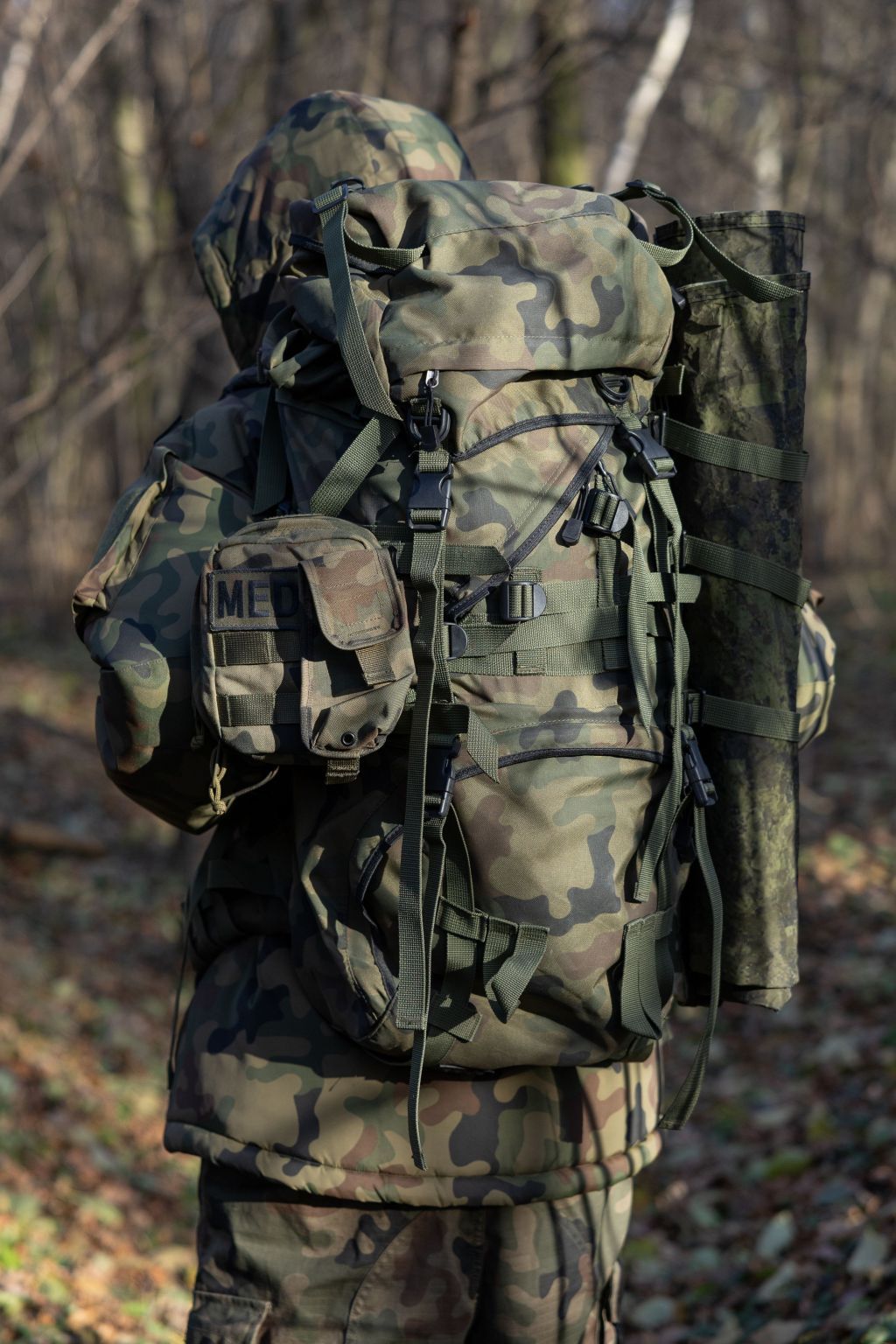
The simplest and most widespread camouflage technique used by animals is so-called passive camouflage, which involves matching body colour and/or pattern to the surrounding environment. Typical examples include tigers and leopards, which use disruptive patterns that simulate the way light falls within forested terrain. This form of camouflage, known as disruptive camouflage, is also the most commonly applied technique in the design of military uniforms and in the painting of military vehicles.
However, certain animal species employ active forms of camouflage, involving changes in colour, pattern distribution, surface texture, or the deliberate use of environmental elements to improve concealment. Examples include chameleons, cephalopods, scorpionfish, flounders, as well as mammals and birds that develop seasonal summer and winter fur or plumage variants.
A complementary adaptive strategy is mimicry, whereby organisms imitate the colour or shape of elements within their environment, such as leaves, twigs, or even bird droppings. This form of adaptation is most commonly observed in insects and amphibians.
- Introduction
- Camouflage – an introduction
- Multispectrality
- Requirements for camouflage covers and other camouflage solutions
- Research techniques in multispectral imaging
- Ultraviolet imaging
- Visible spectrum – pattern as the key factor
- Vegetation reflectance in the near-infrared spectrum
- Combined imaging in the short-wave infrared spectrum
- Hyperspectral imaging in the visible, near-infrared, and short-wave infrared ranges (VIS–NIR–SWIR)
- Thermal imaging in the mid-wave and long-wave infrared spectrum
- Radar testing
- Summary
- Innovation
- Camouflage of military equipment and command posts
- Static camouflage
- Mobile camouflage
- Solutions
- Soldier camouflage
- Individual soldier camouflage
- Effectiveness: technology and skills
- Summary
* Miranda Spółka z o.o. reserves the right to refuse delivery of the eBook.